
Pitru Dosha Pooja in Gokarna – Rituals, Remedies & Booking Guidance
Pitru Dosha is believed to arise when ancestral souls (Pitru Devatas) remain unsatisfied due to unfulfilled rites, improper last rituals, or karmic imbalances within the lineage. In Vedic tradition, honoring ancestors is not optional — it is a sacred responsibility. When ancestral rites are neglected or incomplete, the effects are said to manifest in the lives of descendants.
Gokarna, one of the most sacred kshetras in Karnataka, is regarded as a powerful center for performing Pitru-related rituals. Many families from across India visit Gokarna specifically to perform Pitru Dosha Pooja under the guidance of experienced Vedic priests.
Common Signs Associated with Pitru Dosha
Families approach for Pitru Dosha Pooja when facing persistent patterns such as:
- Delay in marriage
- Difficulty in conceiving children
- Repeated miscarriages
- Family disputes without resolution
- Financial instability
- Sudden losses
- Chronic health concerns
- Lack of progress despite effort
- Frequent mental unrest within family
It is important to understand that these signs are traditional interpretations and must be viewed within spiritual belief systems rather than medical or scientific frameworks.
Why Perform Pitru Dosha Pooja in Gokarna?
Gokarna is considered a powerful Pitru Kshetra due to:
- Presence of the Mahabaleshwar Temple
- Sacred coastal geography
- Historical performance of ancestral rites for centuries
- Mention in Puranic traditions
- Spiritual atmosphere conducive to Shraddha rituals
Gokarna’s seashore is often used for Tarpana and Pinda offerings, symbolizing the connection between the earthly and ancestral realms.
The energy of the place and continuity of ritual tradition make it a preferred destination for Pitru rituals.
Main Rituals for Pitru Dosha in Gokarna
There is no single universal ritual for Pitru Dosha. The appropriate ceremony depends on the family’s circumstances, ancestral history, and priest consultation. Based on traditional guidance, one or more of the following rituals may be recommended.
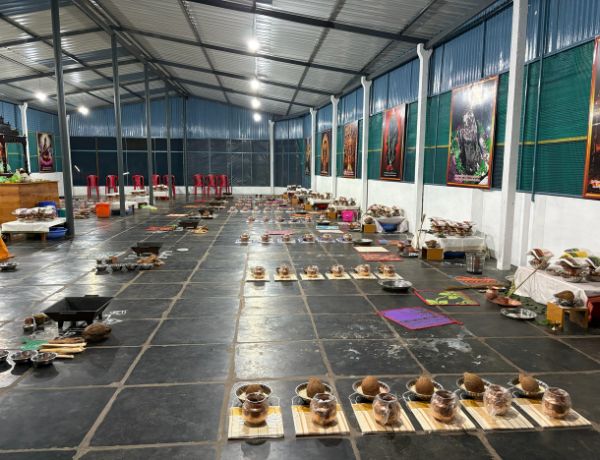
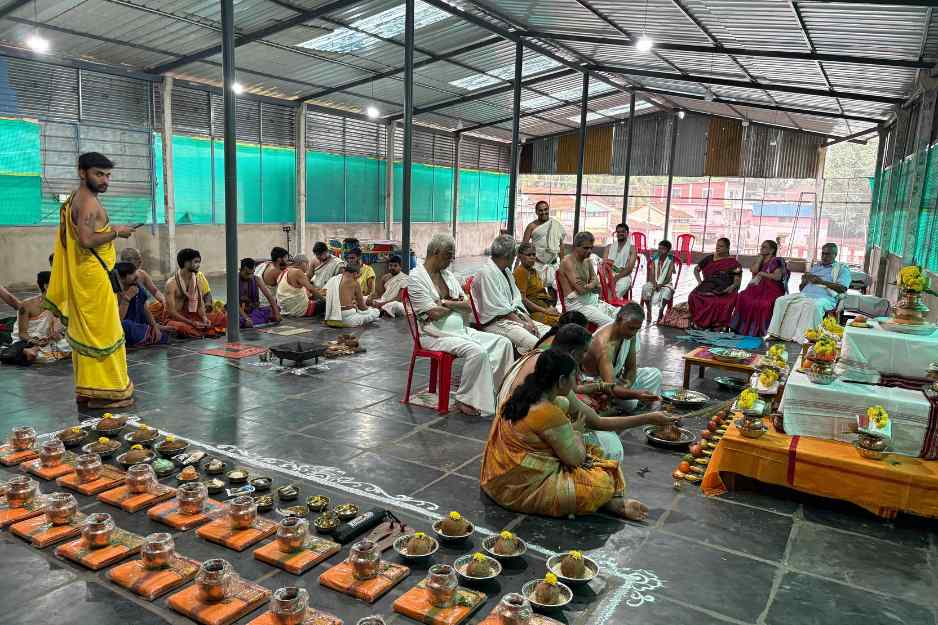
Narayana Bali
Tripindi Shraddha

Pinda Pradhana
Tila Tarpana
Pitru Shanti Homa
Pitru Shanti Homa is a fire ritual conducted to invoke peace for departed souls and to reduce karmic obstacles believed to arise from ancestral imbalance. Sacred fire is established, and offerings are made while chanting prescribed mantras. The homa is considered spiritually purifying and is often performed along with other Pitru rituals to complete the process of ancestral appeasement.
The exact combination and sequence of these rituals are determined after discussion with the priest, who assesses the family’s background and recommends the appropriate procedure based on scriptural guidelines.
Detailed Procedure of Pitru Dosha Pooja
Though the exact process may vary slightly, a general outline is as follows:
Day 1 – Sankalpa and Invocation
- Priest performs Sankalpa (ritual intention)
- Family members state lineage details
- Invocation of ancestors
- Preliminary Tarpana
Main Ritual
- Preparation of sacred altar
- Offering of Pinda (rice balls)
- Mantra chanting
- Ritual feeding of symbolic representations
- Prayers for liberation and peace
Homa (Fire Ritual)
- Sacred fire is invoked
- Offerings made into fire
- Chanting of specific Pitru Shanti mantras
- Completion prayers
Final Ritual
- Tarpana at seashore or temple tank
- Dakshina to priests
- Blessings for family
The ritual usually requires one or two days depending on type.
Who Should Perform Pitru Dosha Pooja?
Pitru Dosha Pooja is traditionally recommended for families experiencing recurring generational issues that seem to persist despite consistent effort and practical remedies. It is often advised for individuals who have been guided by an astrologer to address ancestral imbalance indicated in their horoscope. Those who have missed annual Shraddha rituals for departed ancestors may also consider performing this ceremony to fulfill their traditional obligations. Families with a history of unnatural or untimely deaths in the lineage frequently undertake this ritual as part of spiritual rectification. In addition, some families choose to perform Pitru Dosha Pooja before major life events such as marriage or childbirth, seeking ancestral blessings and harmony within the household.
Both men and women may attend and participate in the ceremony. In many traditional settings, the eldest male member of the family performs the primary offerings; however, this practice can vary depending on family structure and priestly guidance.
Best Time to Perform Pitru Dosha Ritual
Though it can be performed throughout the year, certain periods are considered especially significant:
- Amavasya (New Moon)
- Mahalaya Paksha (Pitru Paksha)
- Specific tithis related to ancestor’s death anniversary
However, ritual timing should be finalized after priest consultation.
How Long Does the Ritual Take?
- Basic Pitru Shanti: 1 day
- Narayana Bali: 2 days
- Combined rituals: 2–3 days
It is advisable to arrive one day prior to ritual.
What Should You Bring?
Typically required:
- Traditional attire (Dhoti / Saree)
- Towel
- Personal documents if required
- Astrological chart (if available)
Most ritual materials are arranged locally by the priest.
What Devotees Should Do Before Leaving Home for Pitru Dosha Pooja
Proper preparation before arriving in Gokarna ensures that the Pitru Dosha Pooja is performed smoothly and in accordance with tradition. Devotees are advised to confirm the ritual date, reporting time, and duration with the priest well in advance. Travel plans should be arranged so that participants reach Gokarna at least one day before the scheduled ceremony, avoiding delays or last-minute stress.
Participants should observe basic spiritual discipline prior to the ritual. It is traditionally recommended to maintain a sattvic lifestyle for a few days before the pooja. This includes consuming vegetarian food, avoiding alcohol and non-vegetarian meals, maintaining mental calmness, and focusing on prayerful intention. Some families also observe simple fasting or light meals on the previous day, depending on priest guidance.
Devotees should carry traditional attire suitable for Vedic rituals. Men are generally advised to wear dhoti or traditional clothing, and women are advised to wear saree or modest traditional dress. Black clothing is usually avoided during ritual days unless specifically instructed otherwise.
If available, participants may bring the following details for accuracy during Sankalpa:
- Full names of ancestors (if known)
- Gotra (family lineage)
- Nakshatra (birth star)
- Date or tithi of ancestor’s passing (if known)
If such details are not available, the ritual can still be performed under priest guidance.
It is also important to inform the priest in advance about any medical conditions, elderly participants, or special circumstances so that arrangements can be made comfortably.
Approaching the ceremony with sincerity, mental clarity, and respect for tradition is considered essential preparation for Pitru Dosha Pooja.
Remote / Video Pitru Dosha Pooja Service for Devotees Unable to Visit Gokarna
For devotees who are unable to travel to Gokarna due to distance, health conditions, visa restrictions, or personal constraints, arrangements can be made for performing Pitru Dosha Pooja through remote participation.
In such cases, the ritual is conducted in Gokarna by experienced Vedic priests following the same traditional procedure. The devotee participates through live video connection at the time of Sankalpa, where their name, gotra, and family details are formally included in the ritual intention. This ensures that the ceremony is performed specifically on their behalf.
All required materials are arranged locally in Gokarna, and the ritual is completed in accordance with scriptural guidelines. After completion, photos or video recordings of the ceremony may be shared with the devotee for documentation and reassurance.
Remote participation is especially helpful for:
- Devotees living outside India
- Elderly individuals unable to travel
- Families facing urgent situations
- Those with time constraints
While physical presence in Gokarna carries traditional significance, remote participation allows devotees to fulfill their spiritual responsibility when travel is not possible.
Advance booking and clear communication are required to organize remote Pitru Dosha Pooja services smoothly.
Are Accommodation and Food Arranged?
Accommodation and food arrangements are organized as part of the Pitru Dosha Pooja services in Gokarna. Families visiting for the ritual are provided guidance and assistance with comfortable stay options located close to the temple and ritual area, ensuring convenience during the ceremony days. The accommodation arrangements are planned to support a peaceful and distraction-free spiritual experience.
During the ritual period, food served is simple and sattvic, prepared in accordance with traditional guidelines followed during Vedic ceremonies. The meals are vegetarian and aligned with the sanctity of the ritual process, allowing participants to observe the pooja with proper discipline and focus.
Why Choose Us for Pitru Dosha Pooja in Gokarna
- Conducted by the main temple priest of Gokarna
- Ritual performed near Koti Teertha Kalyani, the most sacred location for Pitru rites
- Direct access for immersion of pindas in the holy kalyani
- Traditional Vedic procedure followed with complete authenticity
How to Book Pitru Dosha Pooja in Gokarna
Contact via Call or WhatsApp
Reach out directly to discuss your requirement and preferred dates.
Book the Required Pooja
Confirm the appropriate ritual based on priest guidance and block the date.
Visit Gokarna or Attend via Video Conference
Perform the pooja in person at Gokarna or participate remotely through live video if travel is not possible.
Frequently Asked Questions (FAQs)
The cost generally ranges between ₹10,000 and ₹20,000 depending on the type of pooja recommended, number of days involved, and specific ritual requirements.
Yes. We arrange accommodation near the pooja location if required. Please inform us in advance so that proper arrangements can be made.
If possible, devotees are advised to remain fasting until completion of the pooja. However, fasting is not mandatory for those with medical conditions or health concerns.
In most cases, yes. Women can attend and participate in the ritual. However, we recommend confirming your specific situation with us before booking.
Yes. If you are unable to travel to Gokarna, the pooja can be performed on your behalf with live video participation.
Depending on the ritual type, the pooja may require one or two days. We will confirm the exact duration after understanding your requirement.
We usually require the devotee’s name, gotra (if known), preferred dates, and basic family details for Sankalpa.
The ritual is conducted near Koti Teertha Kalyani in Gokarna, which is traditionally considered sacred for Pitru rites.
Yes, multiple ancestors can be included in a single ritual. Please share the details while booking.
We recommend booking at least 1–2 weeks in advance. During peak periods such as Amavasya or Pitru Paksha, earlier booking is advisable.